
 Trend Grid 24 Editorial Team
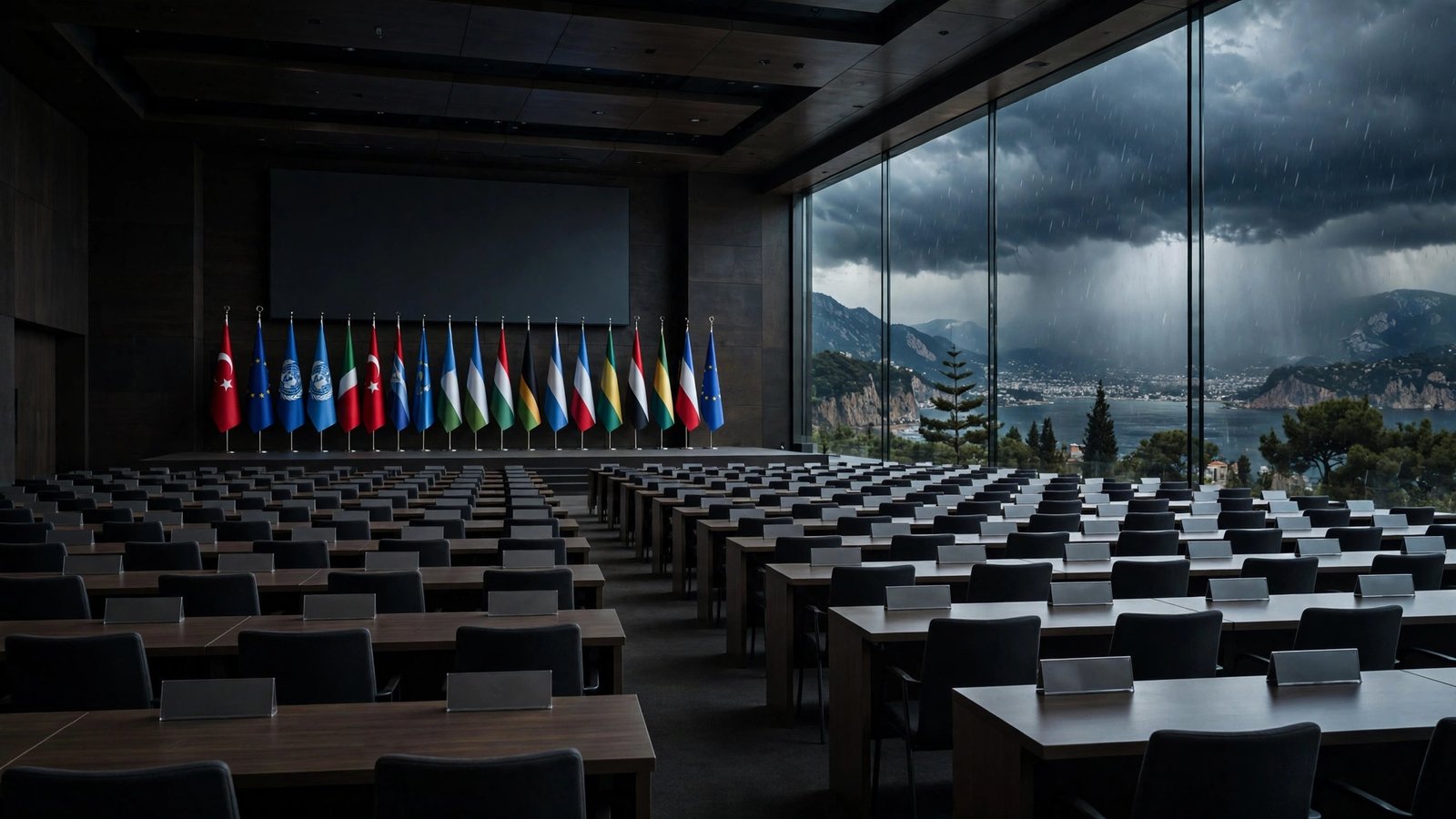
The COP31 climate talks collapsed in Antalya, Turkey, on Sunday, 22 November 2026, ending without an overarching agreement after more than 50 hours of overtime. The European Union and other countries rejected the final proposal from the summit’s joint Turkish-Australian presidency because it contained no mention of fossil fuels — the issue at the centre of the talks. It was the most serious breakdown in United Nations climate negotiations in 17 years, and it leaves the world’s response to rising temperatures without a new agreed plan.
In short, the COP31 climate talks failed on the question they could not avoid. Countries had gathered to agree on how to cut emissions, pay for climate action and keep the Paris Agreement’s 1.5°C limit within reach. Instead, after running two days past their scheduled end — the longest climate summit on record, according to Reuters — negotiators went home with no cover decision, the document that normally sets out what a COP has agreed.
That outcome matters because the science has not paused while the diplomacy stalled. Reuters reported that current national pledges would put the world on course for about 2.8°C of warming, far above the Paris goal. The Associated Press (AP) reported that the world is on track for 2.7°C to 3°C of warming, and that the United Nations Environment Programme has said the world will blow past 1.5°C. This article explains what happened in Antalya, why the deal collapsed, what the rejected text did contain, and what happens next, based on reporting by Reuters and AP from the summit.
Key Takeaways
- COP31 ended on 22 November 2026 in Antalya, Turkey, with no overarching agreement, after more than 50 hours of overtime.
- The European Union and other countries rejected the final text because it made no mention of fossil fuels.
- The rejected draft acknowledged that the world would overshoot 1.5°C, called for faster carbon-removal technologies and a tripling of climate finance, and set a goal of raising electricity’s share of the world’s energy supply to 35% by 2035.
- Nearly 100 nations signed a separate pledge to stop approving new coal plants and take action on fossil-fuel use.
- Unresolved issues were deferred to next year’s talks in Ethiopia, while the 2023 Dubai agreement remains in force.
What Happened at COP31 in Antalya
The final plenary session of the COP31 climate talks on Sunday brought the deadlock into the open. Murat Kurum, Turkey’s conference president, told delegates that there was nothing more to be done. “There is nothing to do. We did all that we could,” he said, according to Reuters, before leaving the stage. The summit had already run two days beyond its scheduled end, making it the longest COP on record, Reuters reported.
Why the Deal Collapsed: the Fossil Fuel Fight
The central dispute was simple, and it was also the hardest one in climate diplomacy. The final draft contained no reference to fossil fuels, even though burning coal, oil and gas is the main driver of global warming. For the European Union and many other countries, that omission made the text unacceptable.
Ireland’s climate minister, Darragh O’Brien, put it bluntly, according to Reuters: “It is unconscionable that we would have a climate act that makes no reference to fossil fuels, and it is also unconscionable that we would not have an agreement on climate finance.”
On the other side, Saudi Arabia and other oil-producing countries lobbied to keep any mention of fossil fuels out of the agreement, AP reported, and Russia and Saudi Arabia sought to keep it out of the final text. Chris Bowen, Australia’s COP31 president of negotiations, described the outcome as “very disappointing”, and said disagreements over fossil fuels and climate finance had been obstacles to a deal at the COP31 climate talks. The United States did not play a significant role at COP31, AP reported, after President Donald Trump, a critic of climate science, took office.
What the Rejected Draft Did Contain
The rejected text was not empty. According to Reuters, the text presented to the COP31 climate talks acknowledged that the world would overshoot the 1.5°C limit and called for faster deployment of carbon-removal technologies. It also called for a tripling of climate finance, although it gave no baseline, so the size of that increase was ambiguous. And it set a goal of raising electricity’s share of the world’s energy supply to 35% by 2035.
Outside the main negotiations, nearly 100 nations signed a separate pledge to end approval of new coal plants and take action on fossil-fuel use, Reuters and AP reported. That pledge shows that many governments were willing to move further than the consensus text allowed, but it is not a substitute for an agreement adopted by all parties at the summit.
Reactions: Frustration, Anger and a Hot-Mic Moment
United Nations Secretary-General António Guterres said he shared the frustration of those who had wanted a stronger outcome. “I share the very profound frustration of so many at the outcome of COP31,” he said, according to Reuters. AP reported that he said he was deeply disappointed that COP31 had ended without consensus on the path forward.
Former US Vice President Al Gore was sharper, calling the failure an outrage. “It is outrageous that a handful of petrostates have veto power over humanity’s future,” he said, according to AP. A young Moroccan representative, Oumnia Anfer, told the plenary that delegates had let young people down, saying, “you have let us down,” AP reported.
The final session also turned chaotic. In a hot-mic moment, Kurum told UN climate chief Simon Stiell to sit down, Reuters reported. Kurum later apologised to Antwi-Boasiako Amoah, chair of the African Group, who had called the process “not transparent” and described the draft as “watered down”, according to Reuters.
Why This Failure Matters
The last time a climate summit failed to get a deal adopted by all parties was in Copenhagen in 2009, Reuters reported. That comparison underlines how unusual the outcome of the COP31 climate talks is: for 17 years, COP meetings have at least produced an agreed text, even when that text disappointed many of the countries present. This time, they could not even agree on that.
The context makes the failure harder to dismiss. Under the Paris Agreement, adopted in 2015, countries agreed to limit warming to 1.5°C above pre-industrial levels. AP reported that 2026 is on course to be the warmest year on record, with a 97% chance of that outcome according to Berkeley Earth, and that October 2026 saw the largest temperature increase.
Extreme weather is already turning those temperature records into human costs. Cyclone Akvan, which crossed India’s eastern coast in November 2026, is a recent reminder of how destructive a single storm can be. The COP31 failure does not cause any one storm, but it means there is no new global agreement to speed up the action needed to limit how much worse such events become.
What Happens Next
Several issues from the COP31 climate talks were deferred to next year’s talks in Ethiopia, AP reported, including details of the transition away from fossil fuels, climate finance and gender. That gives negotiators another year, but it also means another year in which the hardest questions remain unresolved, and in which emissions continue while the 1.5°C limit slips further out of reach.
Not everything was lost in Antalya. Bowen pointed out that the agreement reached in Dubai in 2023 remains in force, and said the transition away from fossil fuels is irreversible. COP31 was not the only high-stakes meeting of world leaders this month: Trump, Xi and Putin met in Shenzhen for the first-ever trilateral summit of the three leaders. Leaders can meet and sign declarations, but turning those meetings into binding progress on climate remains the hardest part of all.
FAQs
Why did the COP31 climate talks collapse?
The COP31 climate talks collapsed because the final draft agreement contained no mention of fossil fuels. The European Union and other countries rejected the text for that reason, and negotiators could not agree on a replacement before the summit ended in Antalya on 22 November 2026.
What was in the rejected COP31 deal?
The rejected draft acknowledged that the world would overshoot the 1.5°C warming limit, called for faster carbon-removal technologies and a tripling of climate finance, and set a goal of raising electricity’s share of the world’s energy supply to 35% by 2035. It did not, however, mention fossil fuels.
What happens after COP31 failed to reach a deal?
Unresolved issues, including the transition away from fossil fuels, climate finance and gender, were deferred to next year’s climate talks in Ethiopia. The agreement reached in Dubai in 2023 remains in force, and Australia’s Chris Bowen said the transition away from fossil fuels is irreversible.
Sources
- Reuters, “COP31 climate talks collapse as EU and others reject deal” — https://www.reuters.com/sustainability/cop/cop31-climate-talks-close-final-deal-says-summit-president-2026-11-21/
- AP News, “UN climate talks fizzle out without an overarching agreement” — https://apnews.com/article/climate-un-turkey-fossil-fuels-global-warming-f6e36c4caf13ec6fed57c9f077cbd067
Conclusion
The COP31 climate talks will be remembered as the summit where the world’s governments could not agree on a climate deal — not because they ran out of things to say, but because they could not agree on the one thing that mattered most: naming fossil fuels. The draft on the table had real content, from carbon removal to climate finance, and nearly 100 countries were willing to go further on coal. Yet without a mention of the fuels driving global warming, the European Union and others would not accept it, and the talks ended with no overarching agreement.
The test of Antalya is what happens before the next summit in Ethiopia: if the year ahead produces a credible plan on fossil fuels and finance, COP31 will look like a painful pause; if it does not, it will look like the moment the process began to break down.
Read more on TrendGrid24.com