 admin
Healthy Breakfast Ideas: 9 Best Picks for Busy Mornings
The alarm goes off, the bus won’t wait and breakfast becomes whatever is closest. Sound familiar? The good news is that healthy breakfast ideas don’t need long recipes or fancy ingredients. With a little planning, a balanced meal can be ready in minutes.
This guide shares nine healthy breakfast ideas, simple meal-prep tips and food-safety basics, so your make-ahead meals stay fresh and safe.
This article is general information, not personalised nutrition or medical advice. If you have diabetes, allergies or another health condition, ask your doctor or a registered dietitian what suits you.
In This Article
(In WordPress, replace this list with the Rank Math “Table of Contents” block.)
- Why Healthy Breakfast Ideas Matter on Busy Mornings
- What Makes a Healthy Breakfast?
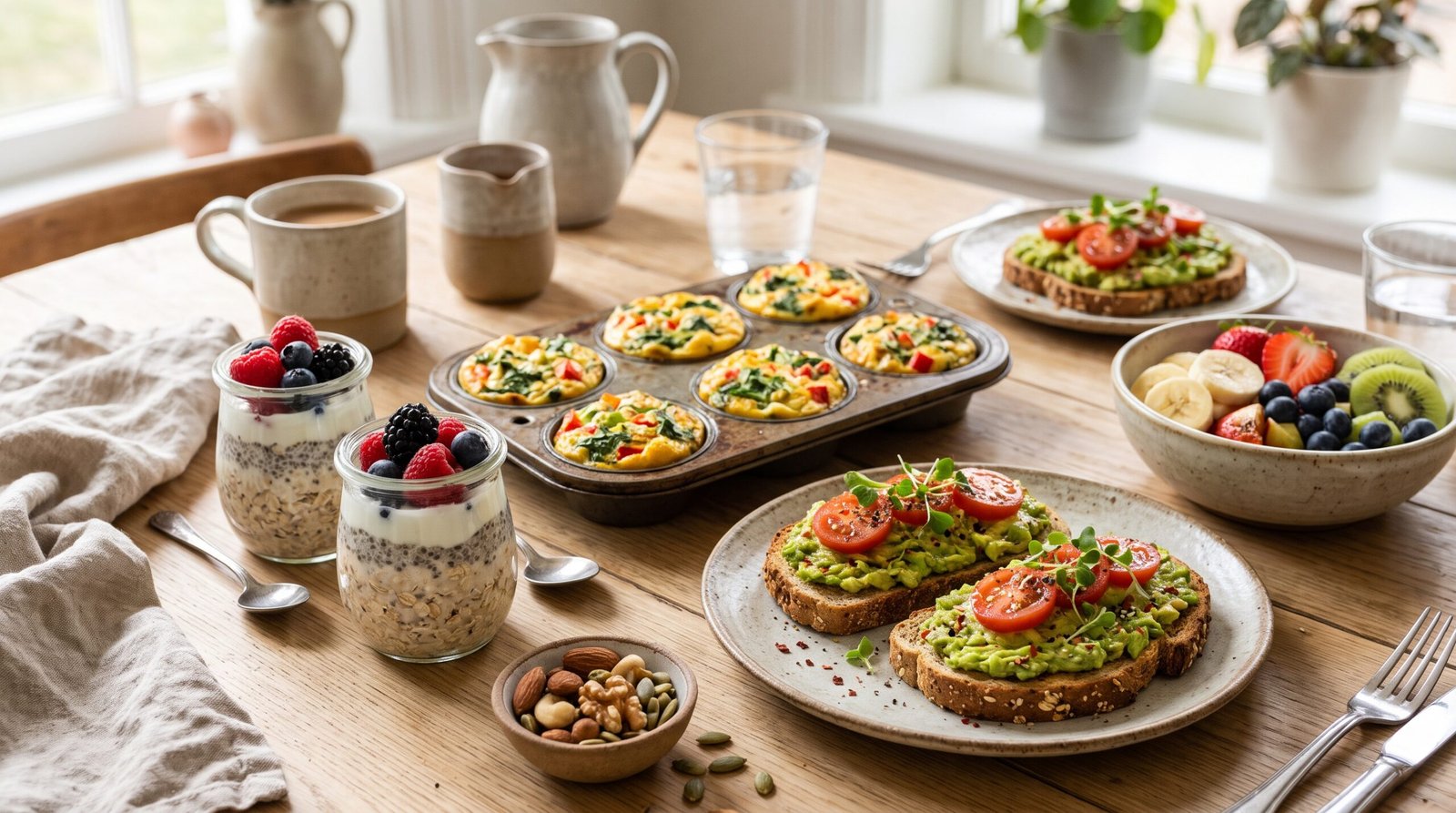
- 9 Healthy Breakfast Ideas You Can Make in Minutes
- Meal-Prep Tips for Healthy Breakfast Ideas
- Food Safety for Make-Ahead Breakfasts
- Common Mistakes with Quick Breakfasts
- Conclusion
- FAQs
Why Healthy Breakfast Ideas Matter on Busy Mornings
When time is short, people often grab packaged foods. The WHO notes that people are now consuming more foods high in energy, fats, free sugars and salt/sodium. Keeping a few go-to healthy breakfast ideas on hand makes the better choice the easier choice. who
Breakfast is not one-size-fits-all. Some people feel best eating early, others prefer a later first meal. What matters most is the quality of your food across the whole day. For more routines that support your wellbeing, see our guide to healthy daily habits.
What Makes a Healthy Breakfast?
WHO’s general healthy-eating advice gives a handy checklist for judging any breakfast:
- Variety: vegetables, fruits, legumes, nuts and whole grains are the foundation of a healthy diet. who
- Fruit and vegetables: WHO recommends at least 400 g (5 portions) of fruits and vegetables every day. Breakfast can contribute one or two of those portions. who
- Free sugars: keep them below 10% of daily energy, ideally below 5%. This includes sugar in honey, syrup and fruit juice. who
- Salt: keep it below 5 g per day, so watch salty processed items. who
You can read the full guidance on the WHO healthy diet page. Use this checklist as a filter for the healthy breakfast ideas below.
9 Healthy Breakfast Ideas You Can Make in Minutes
1. Overnight Oats
Stir rolled oats into milk or plain yoghurt, add sliced fruit and leave the jar in the fridge overnight. In the morning, top with chopped nuts. Sweeten with fruit instead of syrup, since WHO counts honey and syrup as free sugars.
2. Egg Muffin Cups
Whisk eggs with chopped vegetables such as spinach, onion or capsicum, pour into a muffin tin and bake. Make a batch on the weekend and reheat during the week. See the food-safety section below for temperatures.
3. Yoghurt and Fruit Parfait
Layer plain yoghurt with fresh fruit and a sprinkle of nuts or whole-grain cereal. Choosing plain yoghurt keeps added sugar low, and the fruit supplies natural sweetness.
4. Whole-Grain Avocado Toast
Mash avocado onto whole-grain bread, then add tomato slices, a squeeze of lemon and a pinch of pepper. Go easy on added salt.
5. Besan Chilla with Vegetables
Mix gram flour (besan) with water, chopped onion, tomato, coriander and spices into a batter, then cook it like a thin pancake. Gram flour comes from chickpeas, which fit the WHO’s legume recommendation, and it cooks in a few minutes.
6. Vegetable Omelette Roti Wrap
Cook a quick vegetable omelette and roll it in a whole-wheat roti. It travels well, and you can eat it on the go.
7. Fruit and Nut Smoothie
Blend milk or yoghurt with a banana, a handful of berries and a spoonful of nut butter. Use whole fruit rather than fruit juice, because juice counts as free sugars.
8. Daliya or Oat Porridge with Fruit
Cook broken wheat (daliya) or oats in water or milk and top with chopped apple, banana or a few nuts. Cooking a larger pot and reheating portions saves time.
9. Hard-Boiled Eggs with Fruit and Toast
Boil a few eggs at the start of the week. Pair one or two with whole-grain toast and a piece of fruit for a no-fuss plate.
Meal-Prep Tips for Healthy Breakfast Ideas
A little prep on Sunday makes weekday mornings calmer:
- Prep in batches: bake egg cups, boil eggs and portion oats into jars.
- Chop ahead: keep washed, chopped vegetables and fruit in containers.
- Build a “grab shelf”: keep nuts, whole-grain bread and plain yoghurt visible and easy to reach.
- Rotate flavours: change fruits and spices so you don’t get bored.
| Day | Breakfast |
|---|---|
| Monday | Overnight oats with fruit |
| Tuesday | Egg muffin cups and an orange |
| Wednesday | Yoghurt parfait |
| Thursday | Besan chilla |
| Friday | Avocado toast with tomato |
| Saturday | Veg omelette roti wrap |
| Sunday | Daliya porridge with fruit |
Looking for more ideas? Browse our Food category and Recipes category. Many people now also use AI tools to find recipes. Read about it in our article on how AI is changing everyday life in 2026.
Food Safety for Make-Ahead Breakfasts
Make-ahead healthy breakfast ideas are only useful if they are safe to eat. Follow these basics from US food-safety agencies:
- Cook egg dishes thoroughly. USDA advises that quiches, breakfast casseroles and other egg dishes should be cooked to an internal temperature of 160 degrees F (about 71°C), measured with a food thermometer. azureedge
- Refrigerate quickly. Refrigerate leftovers within two hours of cooking, and use shallow containers so they cool quickly. azureedge
- Don’t leave food out. The FDA says cooked eggs and egg dishes shouldn’t stay out of the fridge for more than 2 hours, or more than 1 hour when temperatures are above 90° F. fda
- Mind the timing. Refrigerate leftover cooked egg dishes and use them within 3 to 4 days. Hard-cooked eggs, in the shell or peeled, should be used within 1 week after cooking. fdaucanr
- Reheat properly. Reheat leftovers to 165 degrees F (about 74°C). azureedge
- Keep the fridge cold. USDA says the refrigerator should be at 40 °F (4.4 ºC) or below. ucanr
- Buy and handle eggs carefully. Buy eggs from a refrigerated case, choose clean, un-cracked shells and wash your hands before and after handling raw eggs. msu
More details are in the FDA egg safety guidance and the USDA spring meal safety tips. Pregnant people, young children, older adults and anyone with a weak immune system should follow extra precautions and ask a health professional.
Common Mistakes with Quick Breakfasts
- Relying on sweet packaged foods. Many are high in sugar. Check labels for added sugar and salt.
- Drinking sugary beverages. Juice and sweetened drinks add free sugars quickly.
- Skipping safe storage. Leaving egg dishes or cooked items out on the counter is risky.
- Making plans too complicated. Choose two or three healthy breakfast ideas and repeat them.
- Ignoring allergies. Always check ingredients for nuts, dairy, eggs or gluten if they affect you or your family.
Conclusion
Healthy breakfast ideas don’t have to be fancy. Choose foods built around fruit, vegetables, whole grains, legumes and nuts, keep an eye on added sugar and salt, and prepare ahead so mornings feel easier. Start with one or two of the ideas above this week, store make-ahead meals safely and adjust them to your tastes and health needs.
Read more on TrendGrid24.com
Disclaimer: This article is for general educational purposes only and does not replace advice from a doctor or registered dietitian.
4. FAQs
Q1. What are some quick healthy breakfast ideas for busy mornings?
Overnight oats, egg muffin cups, yoghurt parfaits, avocado toast and besan chilla can all be ready in minutes, especially if you prep ingredients ahead.
Q2. Can I make healthy breakfast ideas ahead of time?
Yes. Overnight oats, boiled eggs and baked egg cups work well. Refrigerate them within two hours of cooking and keep your fridge at 40°F (4°C) or below.
Q3. How long can cooked egg dishes stay in the fridge?
The FDA advises using leftover cooked egg dishes within 3 to 4 days. Hard-cooked eggs should be used within 1 week.
Q4. How can I keep breakfast low in added sugar?
Choose plain yoghurt and unsweetened oats, sweeten with whole fruit and limit juice, honey and syrups, which WHO counts as free sugars.
Q5. Is it okay to skip breakfast?
It depends on the person. Some people prefer to eat later. If you do eat in the morning, choose nutritious foods. Talk to your doctor or dietitian if you have a health condition or take medicines that affect meals.